


The Right Way to Use Coconut Oil for Softer Skin


Coconut oil is often thought of as a kitchen staple, but it has also earned a place in many beauty routines. It is affordable, easy to find, and has a rich texture that can leave dry skin feeling softer and smoother.
That said, coconut oil is not perfect for every skin type. It can work beautifully as a body moisturizer or makeup remover for some people, but it may clog pores or trigger breakouts in acne prone skin. For that reason, it is usually better suited for the body than the face, especially if you are prone to blackheads, congestion, or inflammatory acne.
What Is Coconut Oil?
Coconut oil is extracted from the white flesh of coconuts. It is rich in fatty acids, including lauric acid, myristic acid, and palmitic acid. These fatty acids give coconut oil its thick, nourishing feel and help explain why it is often used in moisturizers, balms, hair oils, body oils, and cleansing products.
Coconut oil is mostly an emollient and occlusive ingredient. This means it helps soften the skin and reduce moisture loss by forming a layer over the skin. However, it does not hydrate the skin in the same way humectants like glycerin or hyaluronic acid do. Instead, it helps lock in the water that is already present.
Research on virgin coconut oil and skin barrier function found that coconut oil helped improve skin hydration and increase skin surface lipid levels in people with mild to moderate dry skin.
To know more on skincare ingredients, shop our skincare ingredients dictionary on Amazon. Click here to shop Vol 1 and here to shop Vol 2.
Benefits of Coconut Oil for Skin
It helps lock in moisture
Coconut oil can help reduce water loss from the skin surface, making it useful for dry or rough areas on the body. It works best when applied after a shower, while the skin is still slightly damp.
The American Academy of Dermatology recommends applying moisturizer after bathing to help trap moisture in the skin.
It can soften rough dry skin
Because coconut oil is rich in fatty acids, it can make dry skin feel smoother and more comfortable. It may be especially useful on elbows, knees, legs, feet, and other areas that tend to become dry.
It may support the skin barrier
A study on virgin coconut oil and inflammatory skin responses found that virgin coconut oil showed anti inflammatory and skin barrier supporting effects in experimental models. This suggests it may be helpful for some forms of dryness and irritation, although more clinical research is still needed.
It can work as a makeup remover
Coconut oil can dissolve makeup, sunscreen, and oil based buildup. To use it as a makeup remover, massage a small amount onto dry skin, then rinse thoroughly and follow with a gentle cleanser. This is important because leaving coconut oil residue on the face may clog pores for some people.
Who Should Use Coconut Oil?
Coconut oil may suit people with dry, rough, or normal body skin. It can be helpful during colder months, after shaving, or when skin feels dry from indoor heating, air conditioning, or frequent bathing.
If you have acne prone, oily, or easily congested facial skin, use caution. Coconut oil is considered comedogenic for many people, meaning it may contribute to clogged pores. If your skin breaks out easily, it is better to avoid using coconut oil on the face and keep it for the body only.
If you have eczema prone or sensitive skin, patch test first. Natural does not always mean irritation free, and plant oils can still cause reactions in some people.
How to Use Coconut Oil as a Moisturizer
Use coconut oil after showering, when your skin is clean and slightly damp. Take a small amount, warm it between your hands, and massage it into dry areas of the body.
For very dry skin, you can apply a water based lotion first, then layer coconut oil on top to seal it in. This works better than using coconut oil alone because your skin gets hydration first and then an oil layer to help lock it in.
Avoid applying coconut oil to active acne, oily areas of the face, broken skin, or irritated rashes unless advised by a dermatologist.
Best Coconut Oil Alternatives
If coconut oil feels too heavy or causes breakouts, try lighter oils such as jojoba oil, grapeseed oil, sunflower seed oil, rosehip oil, or argan oil. Sunflower seed oil, in particular, has been studied for its barrier supportive properties, with research on sunflower seed oil and skin barrier function showing benefits for barrier recovery compared with some other oils.
Recommended Products

A good everyday body lotion for dry skin because it combines coconut oil with a lotion base, making it easier to spread and less greasy than using pure coconut oil alone. I would recommend it for arms, legs, and post-shower body care. Click here to buy.
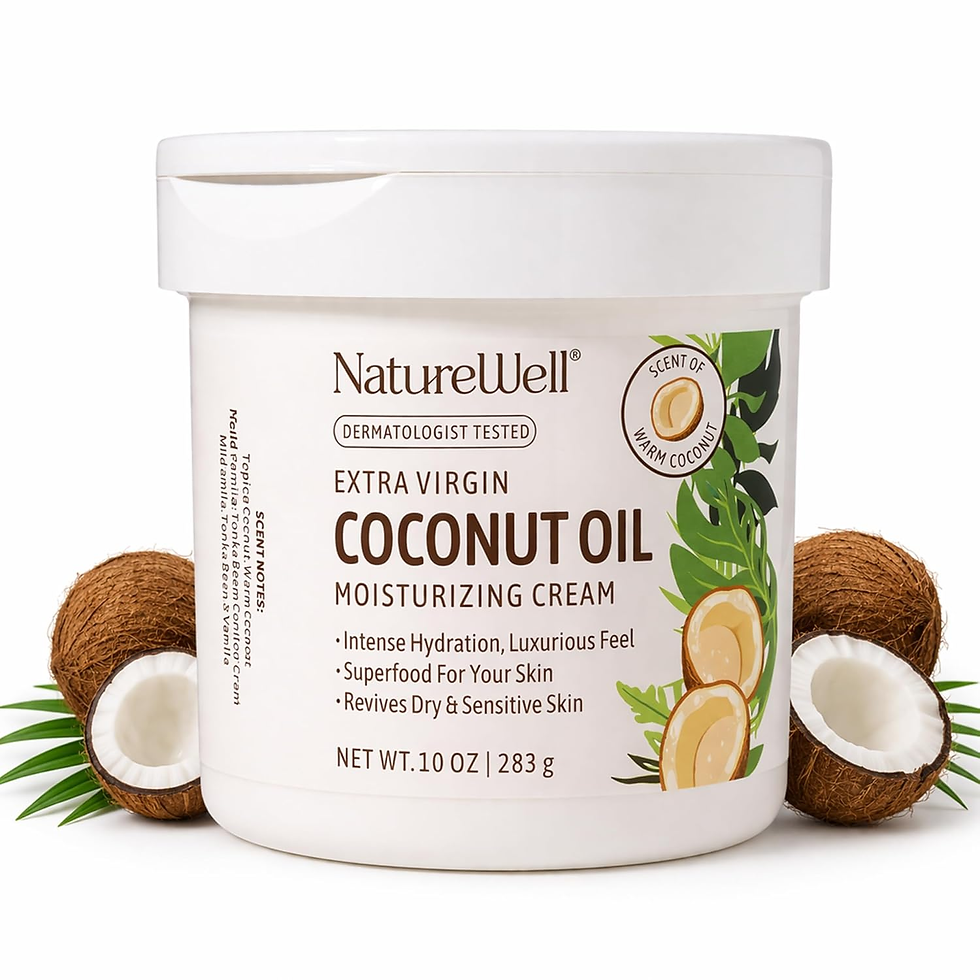
A richer cream format that works well for dry legs, elbows, knees, and winter-dry skin. I recommend it when someone wants the nourishing feel of coconut oil but in a thicker, more cosmetic body cream texture. Click here to buy.

A practical drugstore-style pick for daily body hydration. It is a good option for dry skin that likes a creamy, tropical-scented lotion and needs something affordable for regular use. Click here to buy.
The Final Takeaway
Coconut oil can be a useful natural moisturizer for dry body skin because it helps soften the skin and reduce moisture loss. It works best when applied after bathing or layered over a hydrating lotion.
However, it is not ideal for everyone. If you are acne prone, oily, or easily congested, avoid using coconut oil on your face. For facial moisturizing, a non comedogenic cream or lightweight barrier supporting moisturizer is usually a safer choice.
Sources & Further Reading
Kaye's Beauty Book is here to help you choose better products that suit your skin, hair and lifestyle. All of the products mentioned are carefully researched and selected to ensure that the most credible information comes to you. If you do buy a product from one of our links, Kaye's Beauty Book may earn a commission.
II DISCLAIMER: Every skin is different, not everything works for everybody. I recommend you test the product before completely using any new product. II


Comments